
To City Blossoms, impact means fostering a world in which children and families can build healthy communities for themselves through the creation and cultivation of kid-driven green space. In 2025, 7,421 children and youth had access to safe, creative green spaces across 33 partner sites in Washington, DC.
Our Impact: Systems Shifted
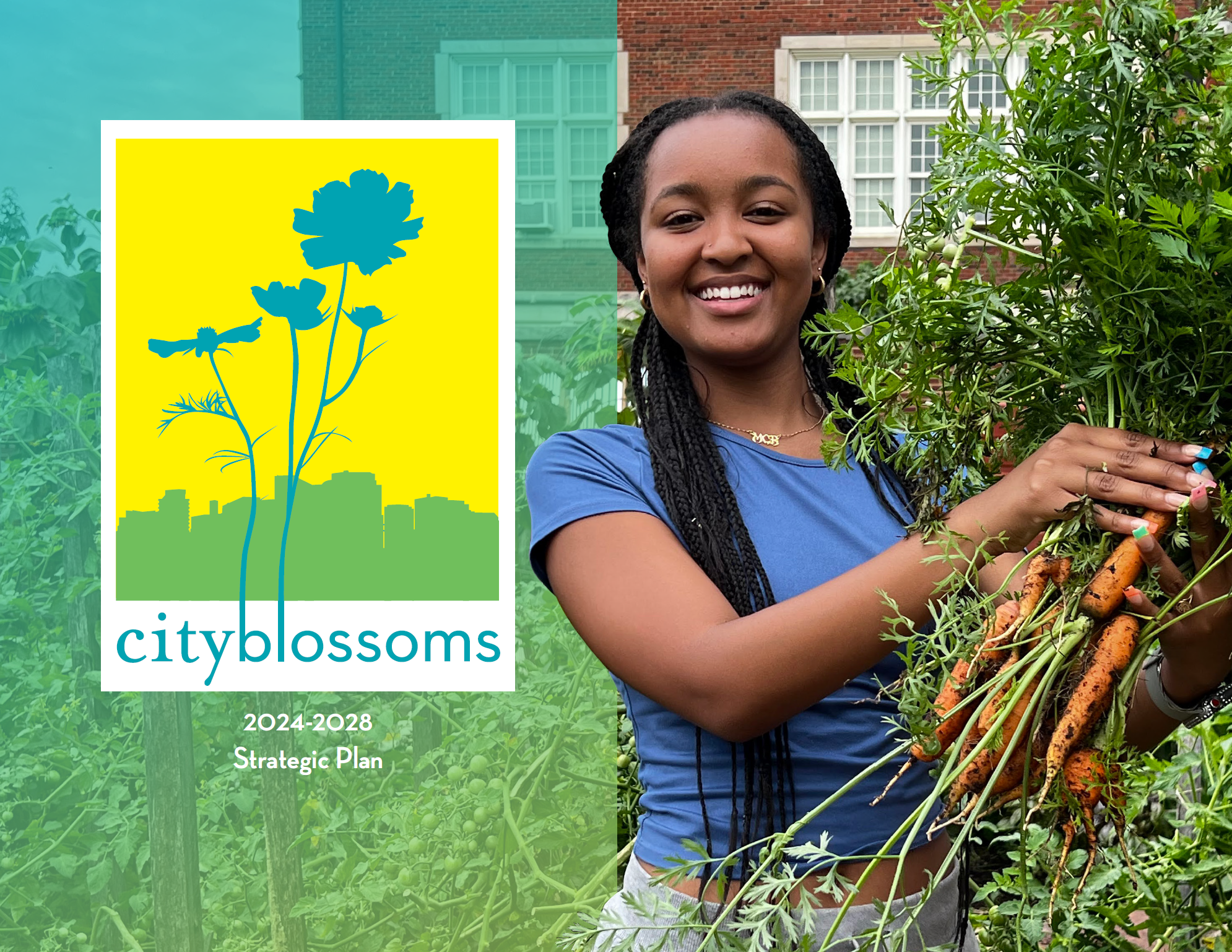
The City Blossoms 2024-2028 Strategic Plan has four strategic goals that build upon our previous plan to meet our vision for the next five years. Staff build and implement annual and quarterly plans informed by the goals, objectives, and outputs outlined in the strategic plan. In this next phase of growth, City Blossoms will strengthen successful program practices, hone our impact assessment and storytelling, continue to grow our brand, and deepen investment in our long-term organizational sustainability.
Created in consultation with Patrick Corrigan
Graphic design by Ali Kurnaz, www.alikurnaz.com
2025 Annual Report
Resilient communities remain the cornerstone of sustainable, lasting change. In moments of uncertainty and volatility, this truth continues to guide us toward the most enduring solutions, those rooted in youth leadership, community voice, and local ownership. For over 17 years, City Blossoms has prioritized self-determination in the partnerships we build with our DC neighbors at early childhood centers, K-12 schools, and neighborhoods. Together, we create gardens rooted in community needs and co-design green spaces where young people experience safety and belonging.
2025 was a year of facing challenges head-on. As access to affordable fresh food became increasingly strained and educators and families faced growing pressure, communities continued to turn to City Blossoms for solutions grounded in care and dignity. Through our free programming centered on youth leadership, we reached over 7,400 children and youth and partnered with 33 early childhood centers, Title I K-12 schools, and neighborhoods to build and sustain kid-driven gardens. These gardens expanded food access, supported hands-on learning, strengthened life-skills, and offered consistency during a year when many systems felt unstable. In 2025, through our gardens and partnerships with local organizations, City Blossoms distributed more than 25,000 pounds of free fresh produce to youth and families across DC, addressing immediate food access needs while strengthening long-term food sovereignty.
When youth shape and take ownership of the green spaces where they gather and grow food, those spaces in turn sustain them. They reflect the lived experiences and histories of the young people and families who steward them. When power remains in the hands of local communities, families are less dependent on larger systems that are more vulnerable to political shifts, funding instability, and climate disruption. This is especially important in a city where more than 90% of park space is owned by the federal government and therefore more susceptible to shifting political agendas and priorities. As our region experiences more extreme weather, locally stewarded gardens play a critical role in neighborhoods most affected by the heat island effect, where communities of color and low-income residents are disproportionately exposed to higher temperatures and fewer cooling resources. Youth-led and community-owned green spaces ensure that access to land, food, and nature remains rooted in local control.
Our educators are central to the work we do. They are key supporters of youth and families across DC, yet budget cuts often affect education first and most significantly impact early childhood educators. In a landscape where DC educators continue to face chronic disinvestment and rising demands, City Blossoms is committed to supporting educator success and well-being. In 2025, over 380 educators participated in our professional development offerings and we provided stipends that support the wages of both early childhood and K-12 educators who take on additional responsibilities as garden champions at their schools. This investment recognizes the expertise and time that educators dedicate to supporting DC youth, and reinforces the long-term sustainability of youth-led gardens as building blocks for foundations of current and future learning.
City Blossoms remains committed to advancing a more resilient and connected DC. As we enter Year 3 of our 2024-2028 Strategic Plan, we are focused on steady growth guided by community priorities and leadership. In 2026, we are committed to meeting the demands of youth in our communities by building four new school gardens, bringing us to 13 new youth-led gardens toward our five year goal of 20. Each new garden represents a long-term investment in youth leadership and agency. Since our founding, City Blossoms has worked toward a vision where all children and youth have access to the benefits that gardens and green spaces provide. As we look toward 2026, we do so grounded in community leadership, guided by youth.
Learn more about our impact in 2025 and the supporters who made it possible.
2025 Program Impact
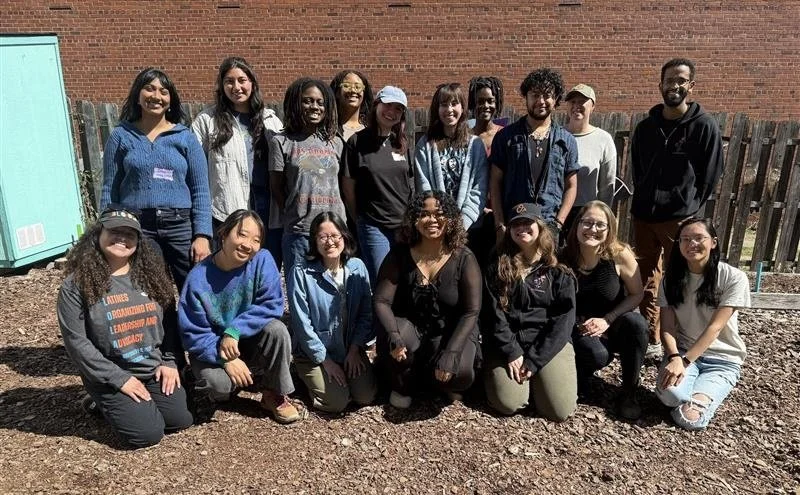
In 2025, 7,421 children and youth had access to safe, creative green spaces across 33 active partner sites in Washington, DC. Keep reading to learn how we are continuing to amplify youth voices, make nature more accessible, and distribute educational resources to our community members and partner schools.
Safe, Inclusive, Outdoor Programming:
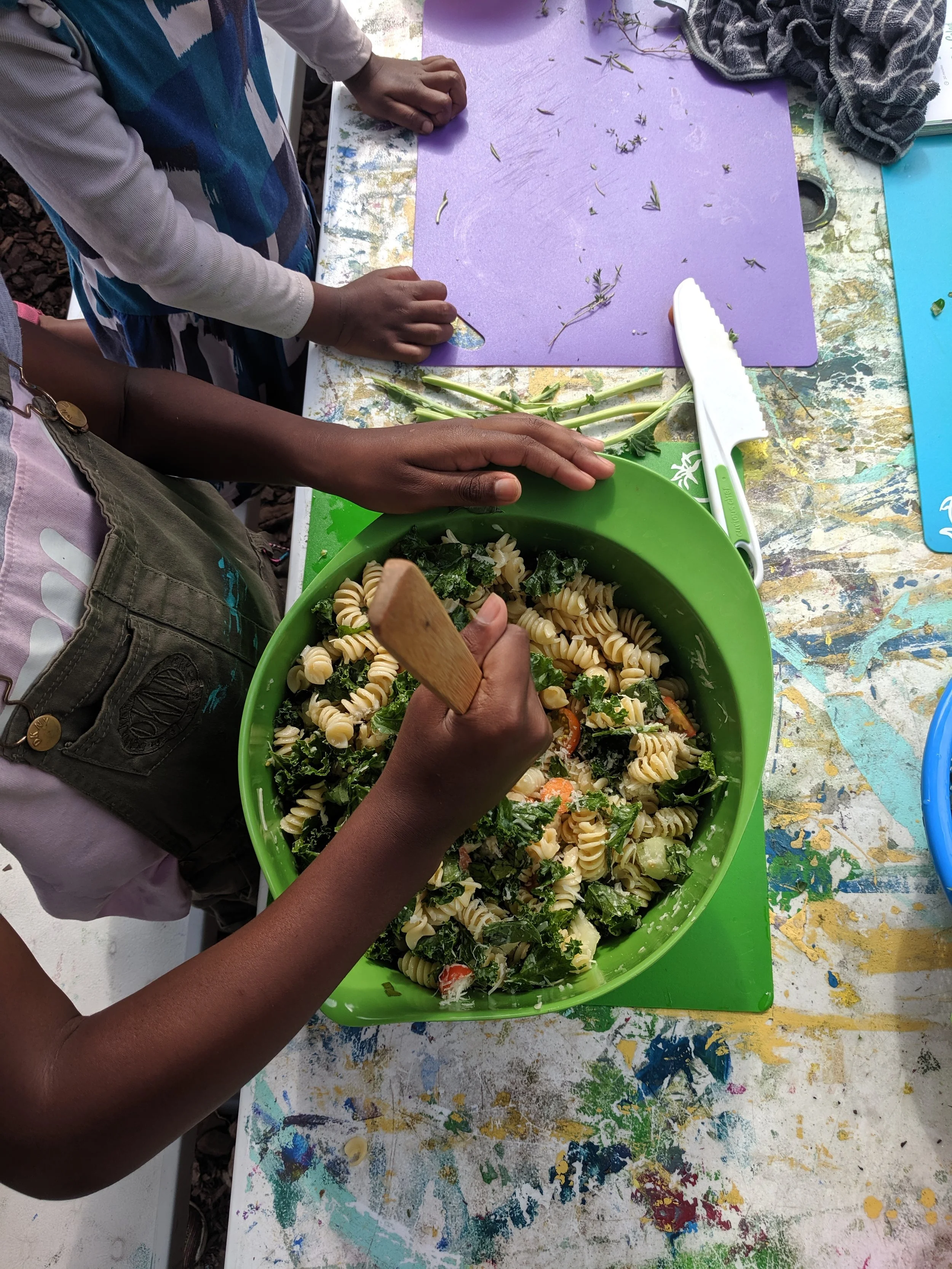
City Blossoms’ Community Green Spaces play an important role in our communities by providing access to nature, opportunities for safe community gatherings, and holistic programming.
1,493 youth and adults accessed programming at our Community Green Spaces.
333.5 hours of free and affordable direct programming at five Community Green Spaces.
167 events, including weekly programs, volunteer days, cooking demonstrations and community celebrations at five Community Green Spaces.
21 field trips were hosted at our Community Green Spaces with nearby schools and community-based organizations that do not have green spaces of their own.
Over 25,000 lbs of free produce distributed to local families at City Blossoms gardens, in partnership with Capital Area Food Bank and Zion Baptist Church.
Youth Engagement:
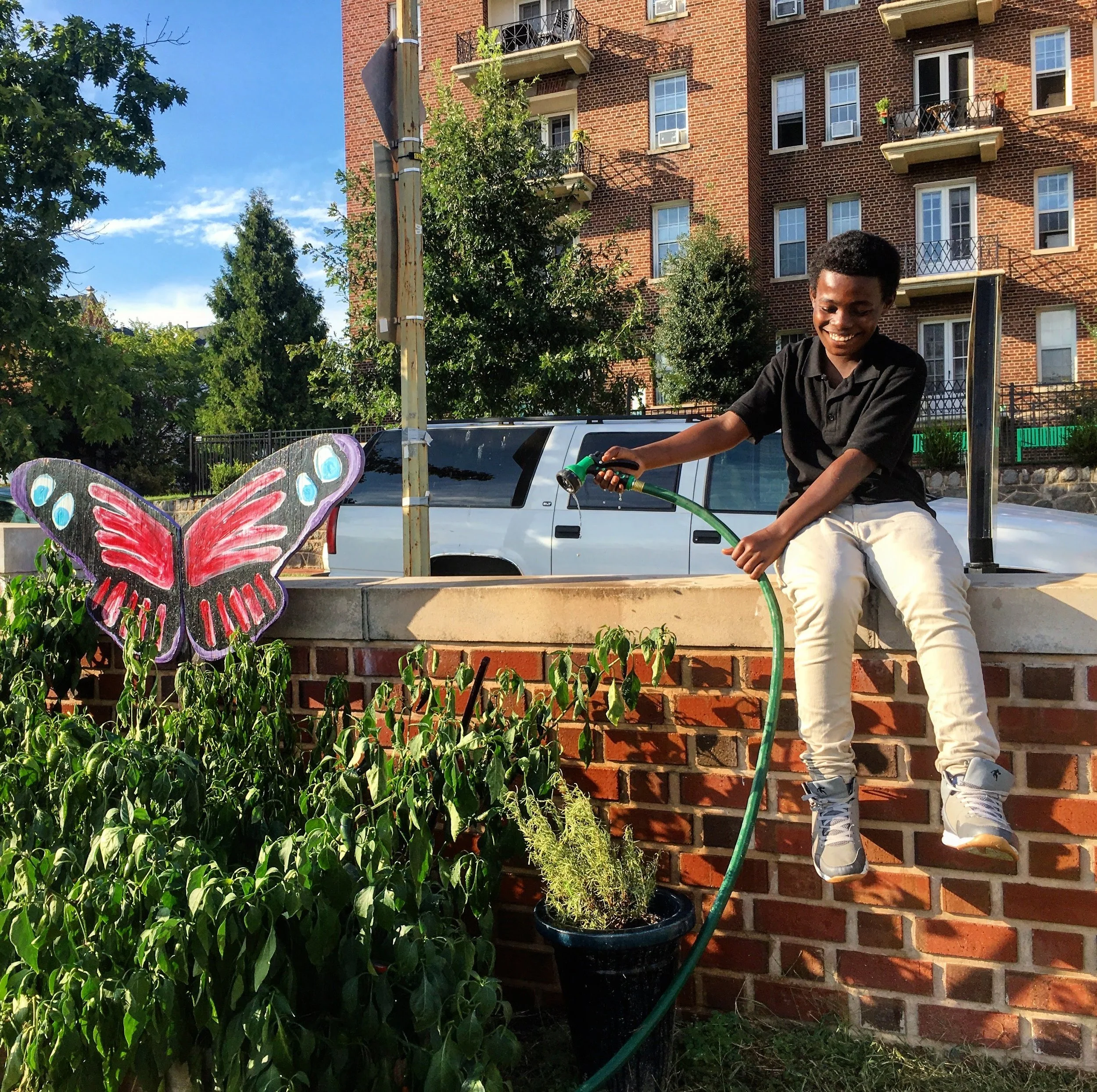
We continued offering our Youth Entrepreneurship Cooperative program for all DC teens, with an emphasis on our partnerships with Eastern High School and Cardozo Education Campus. Programming included garden market pop-ups and participating in DC’s Summer Youth Employment Program.
144 youth participants attending Eastern Senior High School or Cardozo Education Campus participated in free, weekly programming.
325 hours of direct programming were provided, including virtual service opportunities for all DC teens.
237 pounds of produce was redistributed back into the community by the Mighty Greens youth-led garden business, through their market days, donations, and recipes made by the youth.
$3,862 in revenue made by the Mighty Greens youth-led garden business through produce and value-added products sold through CSAs and at markets.
Teacher & Student Engagement:
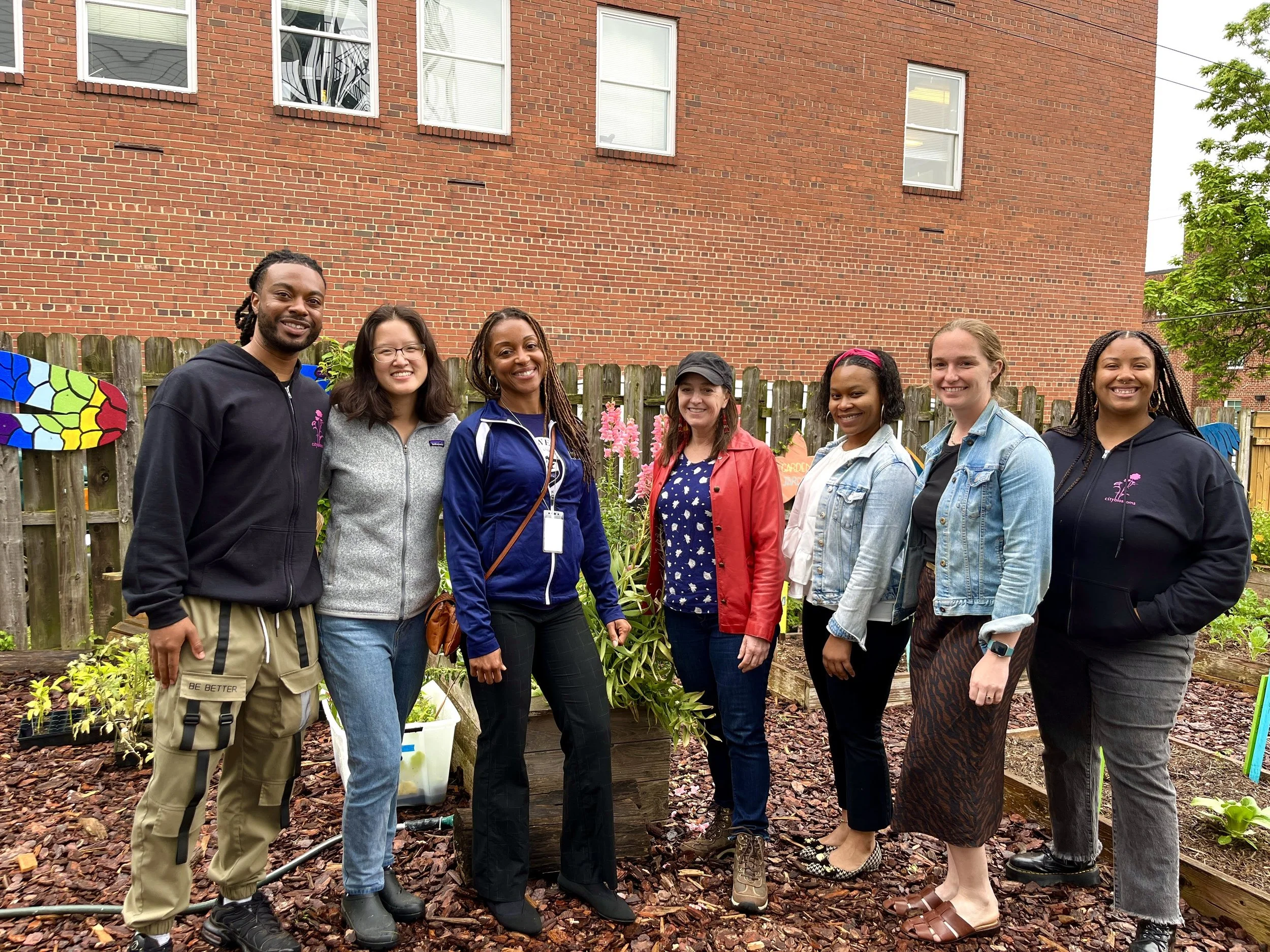
We supported our School Garden Partners and Early Growers partners with garden workdays, classroom workshops, and coaching sessions for educators.
381 educators engaged in interactive garden-based workshops and trainings.
16 early childhood centers in Wards 1, 2, 4, 5, 6, 7, and 8 participated in garden excursions through our Early Growers program.
3,520 children attending Title 1 elementary and middle schools have access to a garden program through our School Garden Partners program.

Leadership & Organizational Highlights:
42 garden workdays were powered by over 770 unique volunteers across all of City Blossoms’ green spaces and partner sites.
Five fellows joined our team this year through our fellowship program, which is designed to support the professional development of emerging leaders interested in community and youth engagement.
One spotlight on our Early Growers program, created by our 2025 Communications Fellow Jelina Liu.
2025 Funding Partners
Thank you for helping make the gardens come to life!
Aceso Foundation
ALDI
Apple
Arc of Justice
Audi
Bainum Family Foundation
Bates White
Beyer Blinder Belle Foundation
Call Your Mother Deli
Capitol Hill Community Foundation
Cedar Tree Foundation
Charles H Miller Foundation
Clif Family Foundation
Crimsonbridge Foundation
DC Department of Energy and Environment
DC Parks and Recreation
DC United
Fieldstone Foundation
Forbright Bank
Hattie M Strong Foundation
Howard and Leslie Stein Family Foundation
Holy Trinity Tithe
Hunton Andrews Kurth LLP
Ina Kay Foundation
Jefferson Ridge Farm
John Edward Fowler Memorial Award
Junior League of Greater Washington
Kennedy Counseling Collective
Kiwanis Club of Washington DC
Maria Otero & Joseph Eldridge
Mayor’s Office on Community Affairs
MGM Grand Resorts
Mission North
Office of Out of School Time
Office of the State Superintendent of Education Division of Health and Wellness
Otero Strategy Group
OXO
Patagonia
Population Connection
Philip L Graham Fund
REWILD
Share Fund
Sprouts Healthy Communities Foundation
TD Charitable
The Asia Group Foundation
The Environmental Protection Agency
The John G. & Jean R. Gosnell Foundation
The Morris and Gwendolyn Cafritz Foundation
The Nora Roberts Foundation
The Rotary Foundation
Toast Inc.
United States Botanic Garden
United States Department of Agriculture
Wild Geese Fondation